


 English
 Spanish
 French
 German
 Italian
 Chinese (Simplified)
 Japanese
 Korean
 Arabic
 Portuguese

Fly Ash
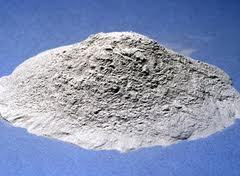

Fly Ash Specification
- Usage & Applications
- Cement Replacement, Backfill, Soil Stabilization, Manufacturing of Fly Ash Bricks
- Application
- Construction, Cement Industry, Road Embankments, Brick Manufacturing
- Surface Finish
- Powdery, fine texture
- Water Absorption
- Low, improves water retention in concrete mix
- Form
- Fine Powder
- Chemical Composition
- SiO2, Al2O3, Fe2O3, CaO, MgO (Silicon Dioxide, Aluminum Oxide, Ferric Oxide, Calcium Oxide, Magnesium Oxide)
- Melting Point
- ~1200C to 1500C
- Hardness (%)
- Not specifically classified
- Product Type
- Pozzolanic Powder
- Types of Refractories
- Not a refractory material itself; sometimes used in refractory formulations
- Shape
- Fine spherical particles
- Porosity
- Low to moderate depending on mix
- Dimensional Stability
- Good, assists in reducing shrinkage in concrete
- Strength
- Compressive strength depends on mix, generally enhances strength in concrete
- Thermal Conductivity
- Low thermal conductivity
- Color
- Gray to light gray
About Fly Ash
With an aim to cater the diverse range of needs of clients, we are presenting our clients a wide array of Fly-Ash. It is also used to process cement, embankment, concrete, geopolymers, metal matrix composites and many others. Proposed product is processed and refined using superlative quality basic materials and modern processing methodology. Also, we ensure our clients that this product is tested on set quality parameters to make certain its optimum quality. To meet the diversified needs of clients, we are offering this Fly-Ash in various packaging options.
Features:
-
Precise pH value
-
Correct formulation
-
Excellent chemical property
-
Longer shelf life
Further Details:
Fly ash is occurs through coal combustion process and is like volcanic ash which gets carried off with the flue gases. Fly ash can be stored in silos which is for testing and in various other useful classification. It is used as a replacement of portland cement used in the production of concrete.
Fly ash material solidifies when comes in connect with air. These are spherical in shape and available in the size ranging from 0.5 to 100 =µm. It consists of silicon dioxide (SiO2) present in amorphous, aluminium oxide (Al2O3) and iron oxide (Fe2O3). Consisting of glassy particles, fly ashes are highly heterogeneous. In addition to this, fly ashes also contains various other environmental toxins in significant amounts, such as :
- Arsenic (43.4 Ppm)
- Bariumberyllium (5 Ppm)
- Boron (311 Ppm)
- Cadmium (3.4 Ppm)
- Chromium (136 Ppm)
- Chromium Vi (90 Ppm)
- Cobalt (35.9 Ppm)
- Copper (112 Ppm)
- Fluorine (29 Ppm)
- Lead (56 Ppm)
- Manganese (250 Ppm)
- Nickelselenium (7.7 Ppm)
- Strontium (775 Ppm)
- Thallium (9 Ppm)
- Vanadium (252 Ppm)
- Zinc (178 Ppm) (806 Ppm); (77.6 Ppm)
Superior Reactivity and Strength Enhancement
With a reactivity index above 70% at 28 days, this fly ash complies with IS:3812 standards, providing significant improvement in compressive strength when added to concrete. Its fine, spherical particles assist in reducing shrinkage, contributing to reliable, durable construction results.
Wide-Ranging Applications Across Industries
Fly ash is widely used as a cement replacement, soil stabilizer, and key component in the manufacture of fly ash bricks and backfill material. Its low porosity and thermal conductivity make it suitable for diverse applications from the cement industry to road embankments, offering cost-effective and environmentally responsible solutions.
FAQs of Fly Ash:
Q: How should fly ash be stored to maintain its quality?
A: Fly ash should be stored in a dry, covered area to prevent moisture absorption, which helps preserve its reactivity and maintains its fine, powdery texture suitable for construction and manufacturing applications.Q: What benefits does fly ash offer when used in concrete mixes?
A: Fly ash enhances compressive strength, improves dimensional stability by reducing shrinkage, and assists with water retention in concrete mixes due to its low water absorption and fine spherical shape.Q: When is fly ash typically used during the construction process?
A: Fly ash is commonly introduced during the mixing phase as a partial replacement for cement or as an additive in concrete, brick manufacturing, soil stabilization, or backfill according to project requirements.Q: Where is fly ash sourced and distributed in India?
A: Fly ash is sourced from thermal power plants and distributed nationwide by manufacturers, suppliers, traders, and exporters, supporting various infrastructure and manufacturing sectors throughout India.Q: What is the typical chemical composition of fly ash?
A: Fly ash mainly contains Silicon Dioxide (SiO2), Aluminum Oxide (Al2O3), Ferric Oxide (Fe2O3), Calcium Oxide (CaO), and Magnesium Oxide (MgO), which contribute to its strength and reactivity characteristics.Q: How does fly ash contribute to environmental sustainability in construction?
A: Fly ash usage reduces the reliance on cement, lowers CO2 emissions, and repurposes industrial by-products, making it an eco-friendly solution for sustainable construction and manufacturing projects.Tell us about your requirement

Price:
Quantity
Select Unit
- 50
- 100
- 200
- 250
- 500
- 1000+
Additional detail
Mobile number
Email


Contact Details
NAVIN CHEMICALS
GST : 24AABFN5399N1ZP
GST : 24AABFN5399N1ZP
Address
- PLOT NO. 317/4 AND 5, 40 SHED AREA GIDC ESTATE,Vapi - 396195, Gujarat, India
- Phone :08045803096
- Send Inquiry
 Send Inquiry
Key person
- Mr Rajnikant Patel (Partner)
- Mobile :08045803096

|

 |
NAVIN CHEMICALS
All Rights Reserved.(Terms of Use) Developed and Managed by Infocom Network Private Limited. |
